United CEO Claims American Airlines Lost
United Airlines CEO Scott Kirby stated in a Crain’s Chicago Business interview that American Airlines lost $1.1 billion in Chicago during the 12 months
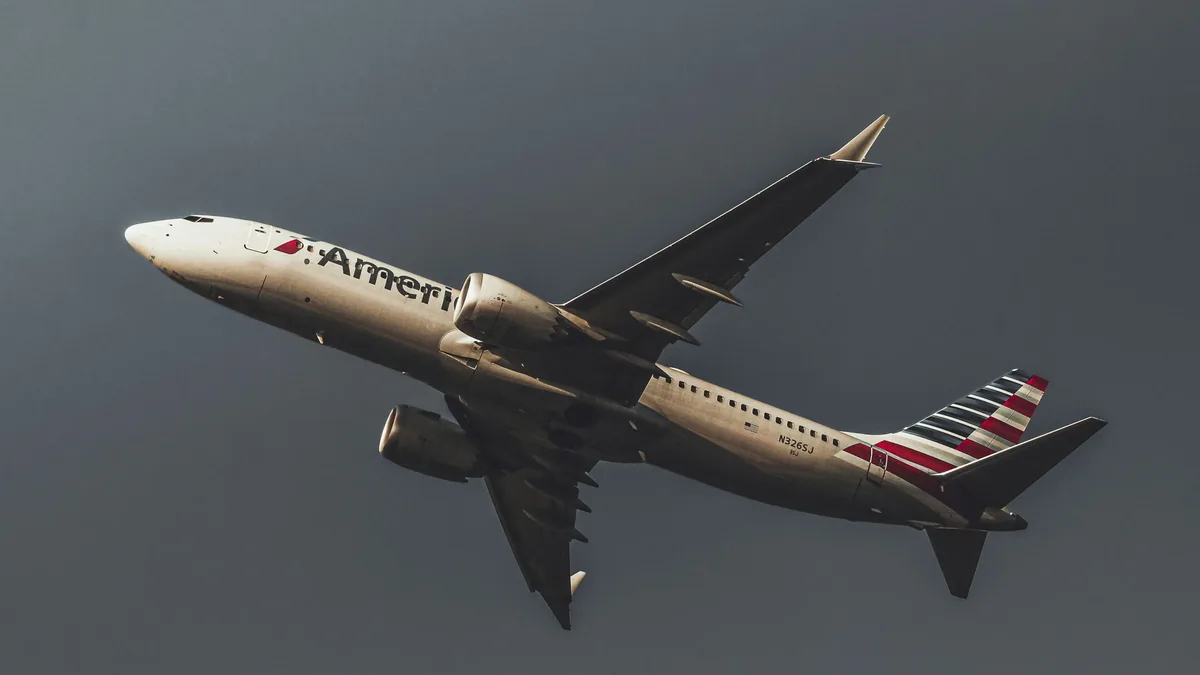
United Airlines CEO Scott Kirby has spent the past year predicting that American Airlines will eventually de-hub Chicago O’Hare. Now he has attached an even bigger loss number to American than he has before, and he’s laid out the prize he sees on the other side.
In a new interview with Crain’s Chicago Business, Kirby says, “Look, economic gravity is going to eventually win.”
He claims American lost $1.1 billion in Chicago during the 12 months leading into the first quarter, and that its full-year result will be worse because this doesn’t include its latest growth push or full run up in fuel costs.
Meanwhile, Kirby says he wants United to grow O’Hare to 1,000 daily departures, with enough additional feed to support 15 more long-haul international destinations. That’s something that can only happen if American walks away, because the number of gates and flights at the airport are heavily constrained and largely fixed.
Why Kirby Believes American Eventually Has To Leave
United has the larger schedule, more gates, more local customer share and a lead in corporate contracts. It has also been producing far better companywide margins than American. American has been basically break-even as a company while United’s full-year 2025 net income was $3.4 billion.
American created much of this disadvantage itself. It retired too many aircraft during the pandemic and couldn’t rebuild Chicago flying coming out of the pandemic. And when a hub offers fewer departure times and fewer destinations, it becomes less useful, dragging connecting flights down with it. And that pushes customers over to the competitor as well, corporate travel programs negotiate deals with the airline that best serves employees, and those decisions compound.
American served Chicago customers less well and made itself less important to their travel and credit card decisions. United was able to turn a schedule advantage into a passenger share advantage, a loyalty advantage and then an even larger schedule advantage.
He says American is losing $1.1 billion in Chicago, and things are getting worse. He says “economic gravity” forces them to eventually confront reality and give up. American has aircraft it could place at Dallas, Charlotte or Miami, where its competitive position is stronger. And United can keep applying pressure in Chicago until American decides those aircraft are worth more somewhere else.
Kirby’s Math Is Wrong And He Likely Knows It
Kirby’s estimates have escalated from an $800 million annual run rate, to a $500 million loss in 2025 and projected $1 billion loss in 2026, and now to $1.1 billion during a trailing 12-month period and a claim that those numbers will get even worse.
Accounting estimates are a funny thing. And as Obi-Wan Kenobi once said, “What I told you was true, from a certain point of view.” Meanwhile, American CFO Devon May disputed Kirby’s accounting earlier this year.
- He said American’s Chicago O’Hare operation covers its direct operating costs and remains positive after including aircraft ownership and other hub-specific fixed costs.
- But it may appear unprofitable after the company allocates headquarters expense and other systemwide overhead. But eliminating Chicago flying wouldn’t eliminate most of those expenses.
- So those are accounting allocation losses, pulling back from Chicago wouldn’t eliminate them.
- And those numbers don’t include the value O’Hare adds to American’s network or its cobrand credit card revenue. Chicago flights improve American’s customer proposition in spoke cities, while relevance in one of the country’s best card-spending markets supports AAdvantage card acquisition and spend.
American’s return on capital at O’Hare may be poor. They might make more money on flights sending those planes elsewhere. But suggesting that the decision to fly from Chicago is costing American over a billion a year in losses (that if they weren’t committed to Chicago they’d be a billion dollars better off) isn’t a valid claim.
Kirby isn’t making up the numbers, but they don’t mean what he says they mean.
American Has To Make Chicago Work
Kirby’s model appears to assume that subpar returns eventually produce an exit. American is likely to defend their position at O’Hare for a very long time because of the positive contributions it makes.
American has already retreated in New York and Los Angeles. Giving up Chicago would leave it without a major northern interior hub or a strong position in one of the country’s largest premium and cobrand markets. Dallas, Charlotte, Miami, Philadelphia, Phoenix and Washington are valuable hubs but can’t replace Chicago’s geography, local business demand and consumer card spend.
If American walked away from Chicago they’d be relegating themselves to a permanently smaller status as a business. Any hope of growth requires strength in Chicago, LA, and New York alongside their strengths in Dallas and Miami. And it would be the kind of admission that costs the CEO and CFO their jobs. So Kirby’s prediction model is simply unlikely to hold.
Meanwhile, American is also trying to close an approximately eight-point margin gap with United and Delta. It is adding premium seats, introducing new Flagship Suites, improving lounges and paying more attention to customers willing to buy something better than commodity transportation.
As that plan progresses, Kirby is right that he’s got a head start, but American should at a minimum benefit from some mean reversion that improves its margins including at O’Hare, recent elevated fuel costs notwithstanding.
Fares May Not Rise Everywhere, But The Most Valuable Ones Will
The FAA has effectively declared Chicago O’Hare capacity fixed. Its summer 2026 order capped the airport at 2,708 daily operations after airlines proposed more than 3,080 on peak days. They said the airport and air traffic control just couldn’t handle more.
If American shrinks and United replaces roughly the same number of seats, total Chicago capacity does not really fall. Neither supply nor passenger demand has really changed. Looking at nothing else, you’d predict average fares would stay about the same.
That said, there’s not a single price of airfare. They’re charging different passengers different amounts for seats on the same flight, and different flights also have different fare profiles. You might still see fares rise significantly for local Chicago passengers, flying business itineraries, purchasing at the last minute.
- A 2026 Government Accountability Office review found that studies generally showed fare increases of 1% to 8% on routes where airline mergers eliminated a direct competitor.
- American leaving Chicago wouldn’t create a complete monopoly. Delta would remain at O’Hare, and probably grab some of American’s gate space (‘linear frontage’). Southwest would remain at Midway.
- Some routes would see fewer flights. United wouldn’t just fly the same number of Chicago - Boston trips that they were doing before plus the ones American had been flying, so supply might fall on that route, and grow on another. Chicago - Boston fares would rise.
- Local corporate contracts wouldn’t have to discount as aggressively to win market share.
- On net there’s probably some fare increase that comes from United’s hub dominance. Delta passengers in Atlanta benefit from a vast network of non-stop flights, but there’s a fare premium just as there is with American in Charlotte (one that I think is probably well worth it in Charlotte’s case).
It’s reasonable to expect an average fare increase of 1% - 3% in Chicago as a result of consolidation by United there. That’s enough reason for customers to want American to succeed even if they usually fly United. Even more so if they fly the routes that would otherwise see capacity cuts, benefit from the discounts that would disappear, or place strong value on non-stop flights purchased close to travel that might bear the brunt of United’s greater dominance of the market.
What United Gets From A 1,000-Flight O’Hare Hub
The FAA’s summer limit of 2,708 daily operations translates very roughly into 1,354 departures and a similar number of arrivals. A United schedule of 1,000 daily departures would represent almost three-quarters of all departure capacity, leaving only about 354 departures for American, Delta, foreign airlines and everyone else.
The same number of flights and seats are more valuable to a single hub airline than split across two airlines. A passenger arriving from a small Midwestern city could connect to any United