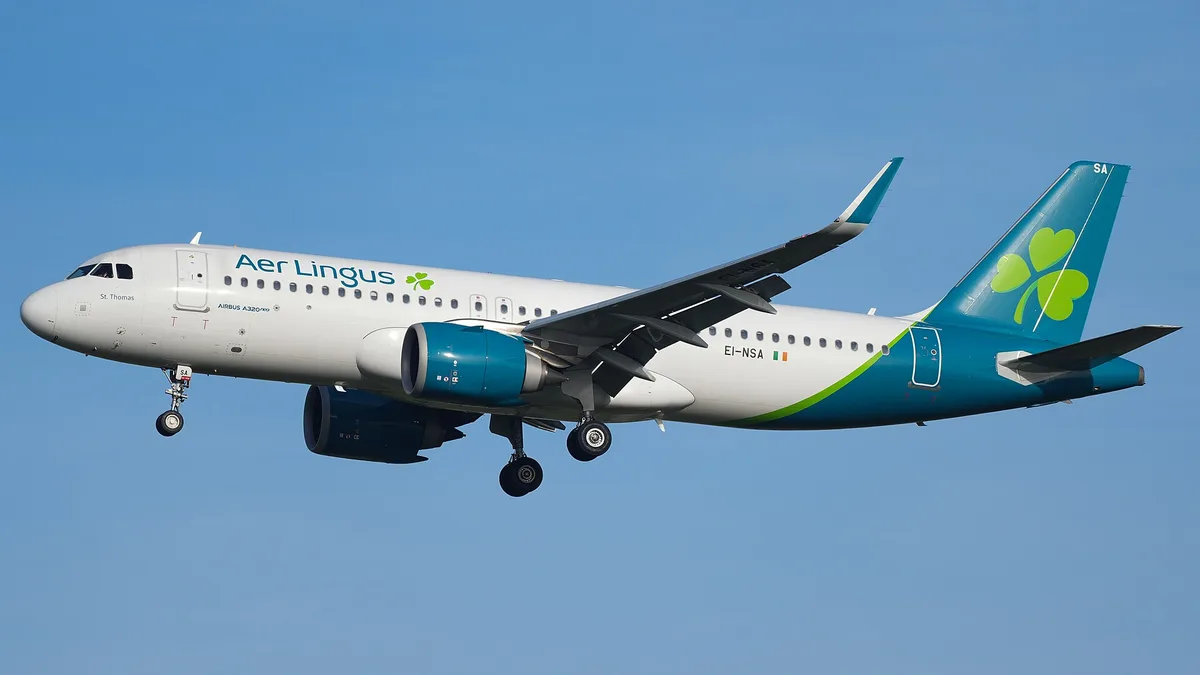
Aer Lingus Ei
| Country of origin | Ireland |
|---|---|
| First created | 1936 |
| Original use | National flag carrier |
| Cabin classes | Economy, Premium Economy, Business |
| Seat pitch (Economy) | 30 to NA inches |
| Fleet composition | Airbus A320 family, Airbus A330, Airbus A321LR |
| Frequent-flyer program | AerClub |
Origin and history
Aer Lingus originates from Ireland and was established in the mid-1930s. It was founded as the national flag carrier of the Irish state. The airline's early operations focused on routes connecting Dublin with other regional centers in the United Kingdom. Throughout the latter half of the twentieth century, it expanded its network to include major European cities. The airline transitioned from a state-owned carrier to a privatized company in the early twenty-first century. It joined the International Airlines Group (IAG) in the 2010s, aligning it with carriers like British Airways and Iberia.
What it is for
Aer Lingus primarily operates as a network carrier connecting Ireland with destinations across Europe and North America. Its core purpose is to provide scheduled passenger air transport to and from its main hubs at Dublin and Shannon airports. The airline serves a vital role in facilitating tourism and business travel for the Irish economy. It also offers connecting services via Dublin for passengers traveling between North America and Europe. Additionally, Aer Lingus operates regional routes within Ireland and to the United Kingdom. Its structure includes both short-haul European flights and long-haul transatlantic services.
Is Aer Lingus Ei a good airline
Aer Lingus is generally considered a reliable and efficient mid-market airline, particularly on its core routes. It typically achieves satisfactory punctuality ratings on its European and transatlantic networks. The cabin product, especially on long-haul aircraft, is modern and competitive for its price point. Customer service experiences can vary, with positive feedback often related to onboard staff but criticism sometimes directed at ground operations or call center responsiveness. The airline's fare structure is straightforward, but ancillary fees for seats, bags, and changes are standard for the industry. It represents a solid value proposition for travelers seeking direct connectivity to Ireland without the premium price of some other full-service carriers.
Aer Lingus Ei baggage allowance
Baggage allowance on Aer Lingus is strictly tied to the fare type purchased, whether on short-haul European routes or long-haul transatlantic services. For short-haul Economy fares, a small personal item is typically included, with all checked baggage incurring a fee. Long-haul Economy fares usually include one piece of checked baggage, while Business Class includes two. Carry-on dimensions and weight limits are enforced, and oversized or overweight bags result in significant fees. Special baggage, such as sports equipment or musical instruments, is subject to specific policies and additional charges. Passengers must verify their exact allowance based on their booking, as it can differ by route and fare family.
Overview
Aer Lingus operates a mixed fleet of Airbus A320 family aircraft for short-haul routes and Airbus A330 and A321LR aircraft for long-haul flights. The airline's service model is a hybrid, offering elements of both low-cost and traditional carrier experiences on different parts of its network. Its transatlantic business class, marketed as Aer Lingus Business, features lie-flat seats in a staggered configuration on wide-body aircraft. The long-haul economy cabin provides seat-back entertainment and complimentary meals and drinks. On European routes, the experience is more basic, with buy-on-board food and beverage service. The airline's frequent flyer program is AerClub, which is integrated within the Avios ecosystem shared with other IAG airlines.
What to know
Aer Lingus flights from North America often arrive at pre-cleared immigration facilities in Dublin and Shannon, allowing passengers to arrive in the United Kingdom or other destinations as domestic travelers. The airline's lowest fare tiers, especially in Europe, are very restrictive and exclude even standard cabin baggage. Upgrades to preferred seats or extra legroom seats can be purchased during booking or at check-in. Aer Lingus does not participate in any global airline alliance but has numerous interline and codeshare agreements. Check-in deadlines are strictly enforced, particularly for transatlantic flights requiring US preclearance. The airline's website and mobile app are the primary channels for managing bookings and purchasing ancillary services.
Common questions
A common question is whether Aer Lingus is a budget airline; it operates a hybrid model with low-cost characteristics on short-haul routes and full-service on long-haul. Passengers frequently ask about the complimentary amenities on transatlantic flights, which include meals, drinks, and entertainment. Many travelers inquire about the US preclearance process in Ireland and the required arrival time before such flights. Questions often arise regarding the differences between fare families, such as "Saver," "Plus," and "Flex," and what each includes. There is regular confusion over baggage allowances, particularly for connecting itineraries combining short-haul and long-haul segments. Another frequent query concerns the earning and redemption of Avios points through the AerClub program.
Pros and cons
Pros include competitive pricing on transatlantic routes compared to other network carriers, a modern and comfortable long-haul cabin product, and the significant time-saving advantage of US preclearance in Ireland. The airline's direct network from Ireland is extensive, and its punctuality is generally reliable. Cons involve the aggressive unbundling of fares on European routes, where everything beyond a basic seat incurs an extra fee, leading to frustration and unexpected costs. Customer service recovery during disruptions, such as flight cancellations, is often criticized as slow and inflexible. The common mistake is purchasing the cheapest fare without understanding the ancillary fees for baggage and seat selection, which can negate the initial savings. Travelers who highly value predictable, all-inclusive pricing often regret choosing Aer Lingus for short-haul travel.
Who it suits
Aer Lingus suits travelers whose primary goal is cost-effective access to Ireland and key European cities from North America. It is a good match for passengers who prioritize the convenience of US immigration preclearance and do not mind a no-frills experience on intra-European segments. The airline appeals to price-sensitive leisure travelers and visiting friends and relatives (VFR) traffic who can pack light or are willing to pay for baggage upfront. It is less suited for business travelers requiring extensive flexibility, high-touch service, or seamless alliance benefits, unless specifically booking its long-haul Business Class. It also may not suit families or groups who need to sit together, as this often requires an additional seat selection fee on most fares.