STARLUX A350-1000 To Feature New Business Class In 2026
STARLUX Airlines will introduce a new 40-seat business class cabin on its Airbus A350-1000s starting in 2026, featuring a 'Zero G' recline mode and
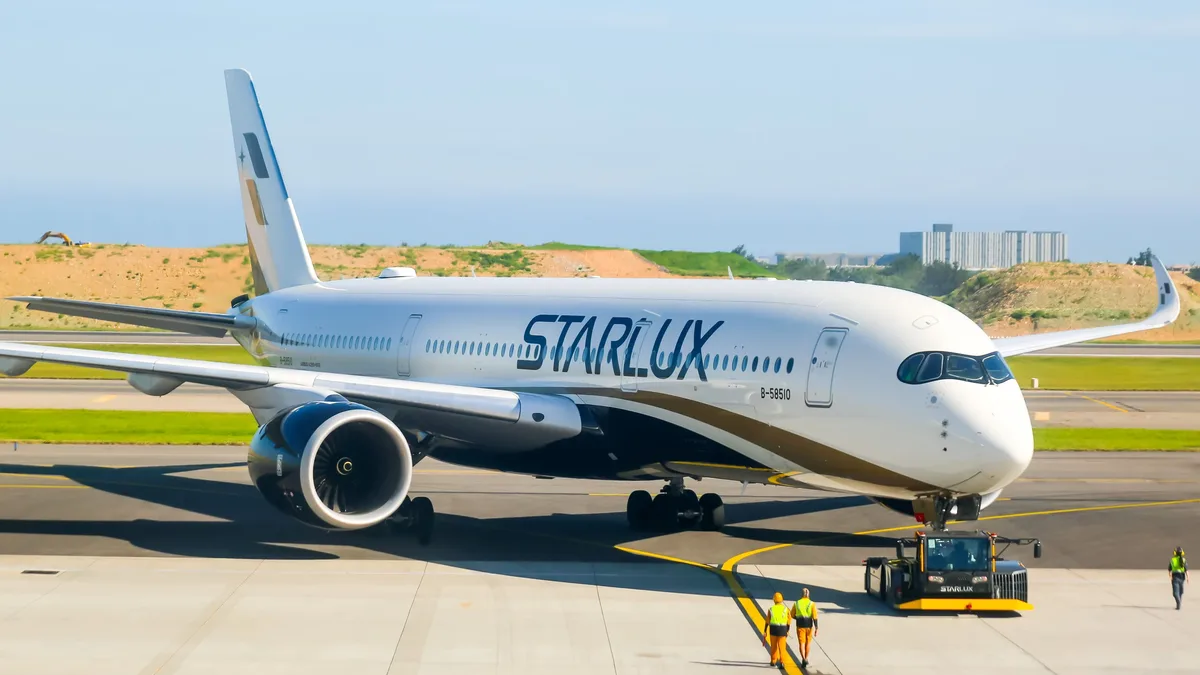
STARLUX Airlines will begin operating a new business class seat on its Airbus A350-1000 aircraft starting in 2026. The Taiwanese carrier is taking delivery of 18 A350-1000s, which it positions as its new flagship.
The airline is increasing its business class capacity significantly with the new jet. The A350-1000 will carry 40 business class seats, a sharp rise from the 26 seats on the airline's existing A350-900s.
STARLUX's Premium Ambition
STARLUX is a young Taiwanese full-service network carrier founded by former EVA Air chairman Chang Kuo-wei. Launched in 2020 and based at Taipei Taoyuan International Airport, it has built an identity around a premium design and high-end service. Rather than competing primarily on price, the airline tries to stand out through cabin quality and branding, operating an all-Airbus fleet. The carrier is using the A350-1000 to deepen its presence in premium long-haul markets, particularly across the Pacific.
The New Business Class Cabin
The new cabin represents a deliberate scaling up of the airline's premium offerings. The seats are designed using the Collins Aerospace Elements platform in a 1-2-1 reverse herringbone layout, ensuring every passenger has direct aisle access. The cabin incorporates sliding privacy doors and very large entertainment screens, with a presentation designed to look sleek.
| Feature | Specification |
|---|---|
| Aircraft | Airbus A350-1000 |
| Business Class Seats | 40 |
| Layout | 1-2-1 reverse herringbone |
| Key Features | Sliding privacy doors, large entertainment screens, 'Zero G' mode |
The 'Zero G' Wellness Feature
A standout feature of the new seat is the NASA-inspired 'Zero G' recline mode. This position is designed to reduce spinal pressure and improve circulation on ultra-long-haul flights. STARLUX is framing comfort around ergonomics and how rested a passenger feels after a long journey, moving beyond the standard promise of a flat bed and privacy door.
Strategy and Market Position
The cabin is central to STARLUX's strategy of combining a boutique luxury identity with competitive pricing. Industry analysts have reported strong demand for the airline's premium cabins. The carrier is reportedly pairing the upscale product with surprisingly competitive fares, including round-trip business class pricing of around $2,600 on some US-Taipei routes. The A350-1000 configuration also includes a four-seat first class cabin, premium economy, and economy.
When compared to its closest Taiwanese rivals, STARLUX's new product appears more ambitious. EVA Air's Royal Laurel business class on the 787 uses older-style privacy panels and smaller monitors. China Airlines' A350 business class is described as a solid but more conventional reverse-herringbone product. Among Asia's leading carriers, competitors like All Nippon Airways, Japan Airlines, and Cathay Pacific also offer suites with privacy doors, making that feature a key benchmark rather than a unique differentiator. STARLUX's potential advantage lies in combining top-tier hardware with its distinct boutique brand identity.
The new business class product is positioned as one of the market's most appealing new options for transpacific premium travelers who value privacy.