Lufthansa pilots question ATC after 17-minute SFO takeoff delay
Lufthansa A380 pilots waited 17 minutes for takeoff clearance at San Francisco Airport on October 9, 2026, prompting a radio exchange with ATC over fuel waste and coordination between controllers.
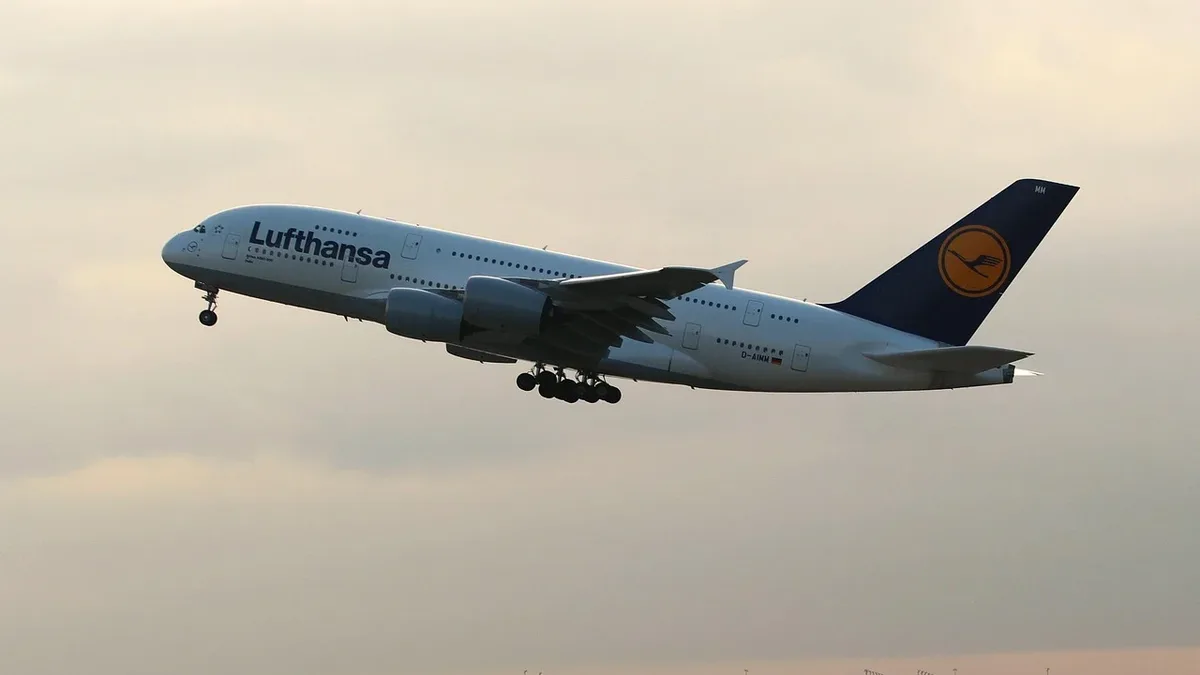
Lufthansa flight LH459 experienced a 17-minute delay holding short of the runway at San Francisco International Airport on October 9, 2026. The Airbus A380, registered D-AIMM, was scheduled to depart from SFO to Munich Airport when the hold occurred, sparking pilot concerns about air traffic control coordination.
During the wait, the flight crew communicated directly with controllers about the extended hold. The tower controller indicated traffic was heavy, stating, 'It’s pretty booked on final, standby.' The controller later suggested the aircraft might depart after two more arrivals. The pilots questioned the sequencing, leading to a discussion with departure control after takeoff.
Communication reveals sequencing concerns
The post-departure exchange revealed the core of the pilots' frustration. One pilot asked, 'Lufthansa 459, how much more possible delay do we have to expect?' After clarifying the wait was 17 minutes, not 15, the pilot pressed the issue of controller coordination.
'17 minutes. And I cannot understand that there is no coordination between approach to coordinate a gap for the takeoff,' the Lufthansa pilot said. The departure controller responded that if a gap needed coordination, the crew should ask the tower directly next time. The controller also suggested contacting Oakland Center on frequency 125.85. The pilots stated they would file a report to seek clarification for future operations, emphasizing the fuel cost of a 17-minute wait for an A380 at the holding point. They thanked the controller and ended the communication.
Operational and fuel implications noted
Aircraft continue to consume fuel while taxiing and waiting on the ground with engines running. For an Airbus A380, even a relatively short ground delay creates additional operating cost. Airlines must account for these fuel expenses across their networks, making unnecessary waiting a significant concern for flight crews and management.
The Lufthansa pilots stated the delay burned a significant amount of fuel. They indicated they would file a formal report over the incident. Analysts note that while the frustration is understandable, 17 minutes may not be unusual during peak traffic periods at a busy hub like SFO. Building sufficient landing gaps is not always easy or efficient, and creating spacing via longer routings also burns fuel.
Context on ATC limitations and traffic flow
Air traffic controllers must manage arriving and departing aircraft while maintaining required separation. At busy airports like SFO, the arrival sequence can limit opportunities for departing aircraft. Creating a departure gap may require adjusting arriving aircraft sequences or waiting for traffic conditions to allow a safe takeoff.
Factors affecting departure opportunities include runway availability, aircraft separation requirements, traffic volume, and operating conditions. Controllers must consider the overall traffic flow rather than the needs of a single flight. The radio exchange indicated arrivals were occupying the available sequence during the wait. Determining whether an earlier departure opportunity was operationally feasible requires more than the radio exchange. Such an assessment would need information about runway configuration, arrival traffic, required separation, and controller decisions.
The pilots had a reasonable basis to ask whether better coordination could have improved the sequence. Their concern about fuel consumption has a clear operational basis. However, a 17-minute wait does not, by itself, demonstrate a failure in air traffic control. Busy airports regularly balance competing demands. Controllers cannot always provide an immediate departure clearance. The pilots stated they intended to submit a formal report over the incident and wanted the issue clarified to prevent similar situations.