Panasonic Avionics Doubles Astrova IFE Production Capacity
Panasonic Avionics has expanded its Osaka factory, increasing Astrova screen production sixfold to meet surging airline demand and support over 150 aircraft programs.
Panasonic Avionics has dramatically expanded its Osaka-Kadoma Factory capacity to support the Astrova in-flight entertainment system's rapid adoption across the airline industry. The company has increased its production capacity sixfold, now able to deliver approximately 180,000 Astrova screens annually.
The factory's total area expanded to more than 10,000 square meters, approximately double its previous footprint. Production space grew by about 1.8 times, while equipment capacity doubled. To achieve this, the facility doubled its Surface Mount Technology lines to four, sourcing machines from within the Panasonic parent company. The assembly line operates two shifts, with a third shift possible within months, and can flex between different screen sizes using the same underlying control board electronics. Roughly 40 different systems models are produced each day using dedicated kitting setups.
Market Adoption and Passenger Impact
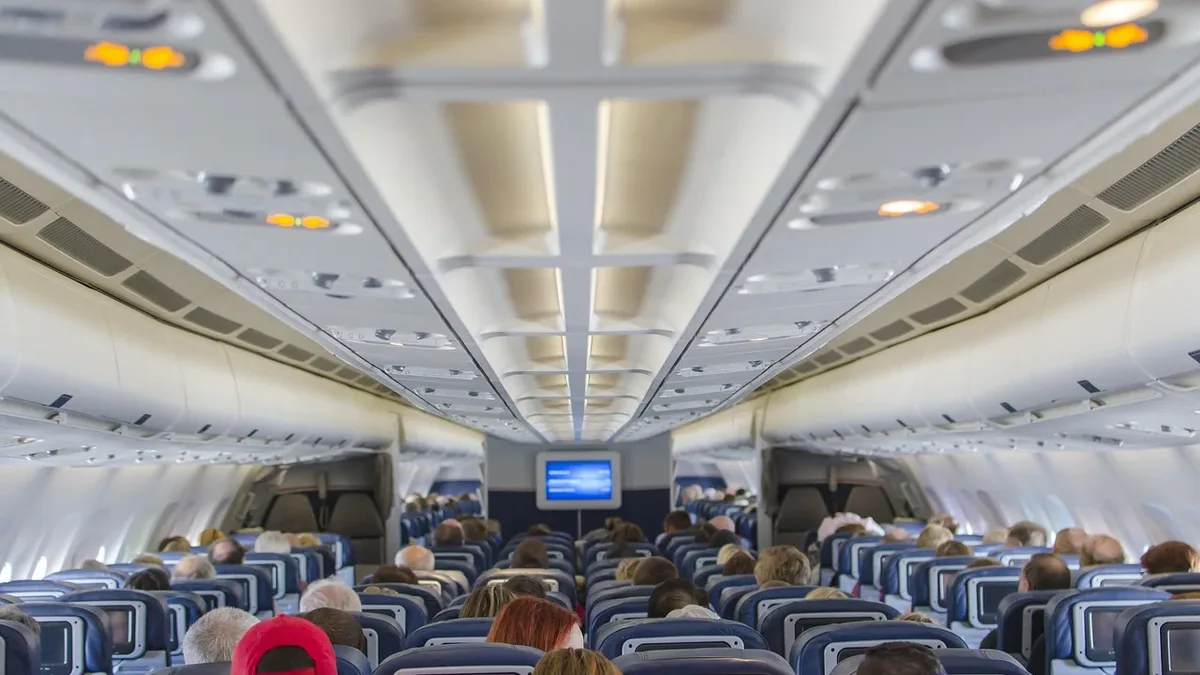
Astrova has achieved unprecedented market penetration with over 45 airlines and 150 aircraft programmes, driving measurable passenger engagement improvements. Panasonic Avionics has sold 500,000 Astrova systems since 2022, making it the fastest-adopted IFE solution in the company's history. A company study conducted across 1,400 flights carrying over 400,000 passengers found an 18 percent improvement in passenger engagement on Astrova-equipped aircraft. The system was developed to bring consumer digital experiences into the aircraft cabin. The factory now serves as a global production hub supporting Astrova's rollout across new aircraft linefit and retrofit programs worldwide.
Production Metrics and Capacity
The factory's scaling addresses a substantial backlog and specific market demands. The company has a backlog of 500,000 committed screens, with a low five-figure number deployed today. Astrova development broke even at 250,000 screens, a figure the company has now doubled. Screen orders are expected to reach a couple hundred by year-end, 1,000 within the next year, and significantly more thereafter.
| Cabin Class | Screen Size | Order Share |
|---|---|---|
| Economy | 13-inch | 75% of committed orders |
| Premium | 16-inch, 19-inch, 22-inch, 27-inch | Growing segment |
The division employs approximately 1,200 workers for precision assembly. Seventy-five percent of committed orders are for economy class cabins with 13-inch screens, while demand for larger premium cabin screens is growing.
Supply Chain and Operational Context
Production planning leverages OEM delivery visibility while mitigating component risks through Panasonic parent company connections. The company has visibility into aircraft delivery timelines from manufacturers, enabling long-term production planning. It relies on the Panasonic parent company for access to components like memory to mitigate supply chain risks. This expansion follows past industry challenges, such as screen delivery delays experienced by United Airlines during its retrofit program four years ago. Today, roughly 80 planes are currently flying with the Astrova system installed.
The Astrova system itself features 4K OLED HDR10+ displays, high-fidelity audio, Bluetooth, passenger-device integration, and charging capabilities. Its features can be upgraded over time for processors, memory, and connectivity standards, and it can connect to in-flight services including new LEO networks. Panasonic Avionics expects more than three million passengers per month to use Astrova screens by March 2027.